Shapes of Survival: In Conversation With Chie Marquart-Tabel & Autin NorteyJanice Faith


Waste is rarely understood as something that travels with intention. It is framed as excess, as aftermath, as something to be managed once it has already accumulated. But waste follows routes; it moves along established infrastructures shaped by trade agreements, political decisions, and long-standing economic dependencies. It does not simply end up somewhere. It is sent there.
“Waste colonialism” names this system. It describes the ongoing practice through which countries in the Global North export the material consequences of overconsumption to the Global South. Plastic, textiles, and other forms of waste leave one geography and arrive in another, where they enter ecosystems, economies, and daily life in ways that are often irreversible. What is presented as disposal is, in reality, displacement.
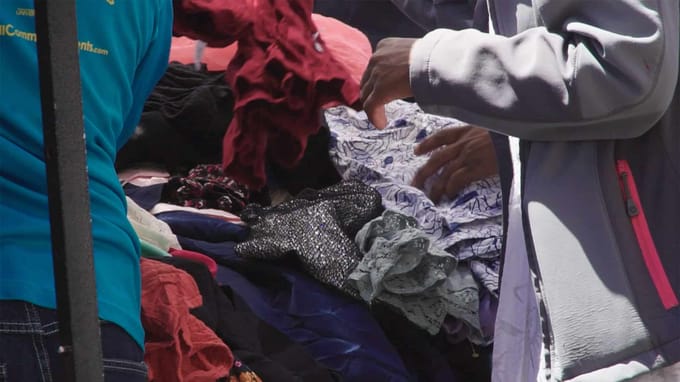
In the context of fast fashion, this movement has accelerated. Production cycles have shortened, volumes have increased, and quality has declined. The result is not only more clothing, but more clothing that cannot be worn, resold, or meaningfully reused. Large quantities of these garments are shipped to countries across the African continent, where they exceed local demand and overwhelm existing systems.
However, the language surrounding this process suggests something else. Donation is framed as generosity, recycling is framed as responsibility, and sustainability is framed as a shared project. These narratives rely on the idea of reciprocity, of mutual benefit, of exchange on equal terms. The term “eye level” appears frequently in this context, implying balance between the Global North and South.
Images of landfills circulate widely, and the Global South is often positioned as a site of crisis rather than knowledge. Local expertise and long-standing practices of reuse are frequently overlooked, while Western-led solutions are foregrounded. What this obscures is that sustainability is not new. In many contexts, it is embedded in existing systems of making, repairing, and circulating materials. Practices grounded in durability and resourcefulness have long shaped everyday life.
To speak about waste is also to speak about power: who produces, who consumes, and who absorbs the consequences. Certain forms of labour remain invisible, while entire environments become sites of accumulation.
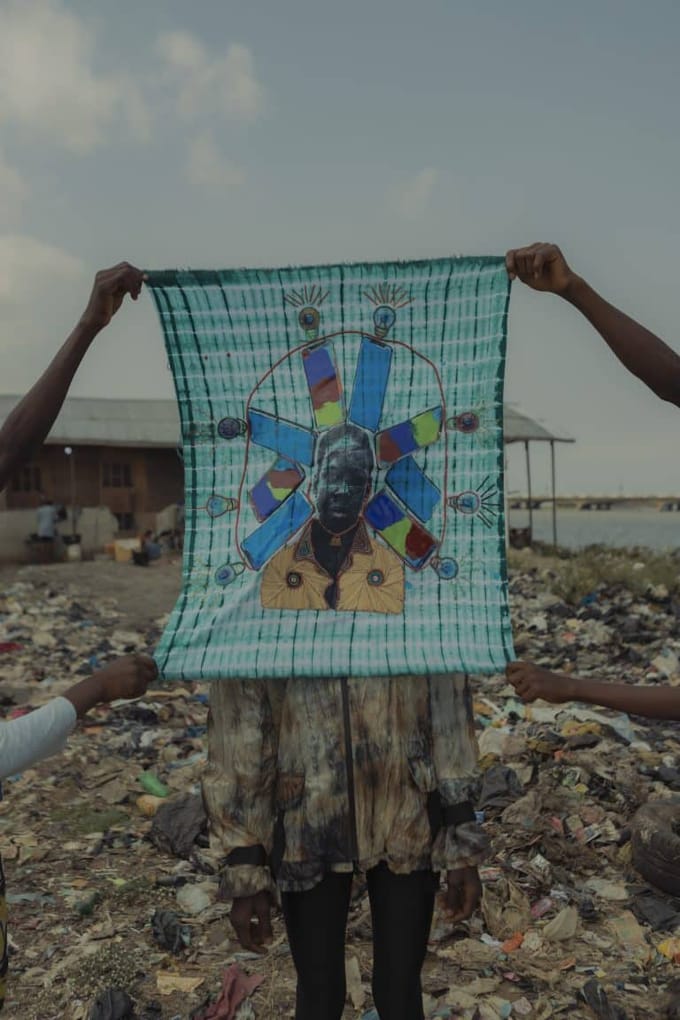
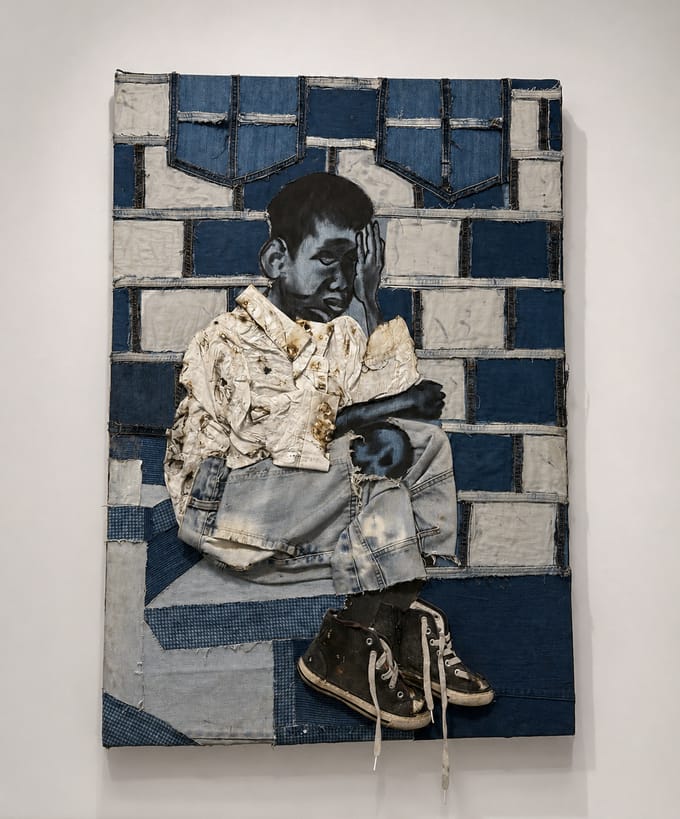
The Land Remembers treats waste as something ongoing rather than resolved. Materials move, but they also remain. They settle into soil, enter water systems, and become part of the environments they are sent to. They register histories of extraction, circulation, and neglect. The works in the exhibition trace these movements.
Working primarily across video and installation, they resist the immediacy often associated with representations of waste. Rather than focusing on spectacle, they attend to what lingers after circulation. Land, in this context, is not a neutral surface. It absorbs what is placed upon it, but it also retains it. The exhibition does not attempt to resolve this tension. It does not offer a singular narrative or a unified position. Rather, it brings together practices that approach the subject from different angles, acknowledging that waste colonialism is not a single issue, but a network of interconnected systems: economic, political, cultural, and environmental.
If waste is what is meant to be forgotten, then memory becomes a form of resistance.
The land does not forget.
Published 19 May 2026